
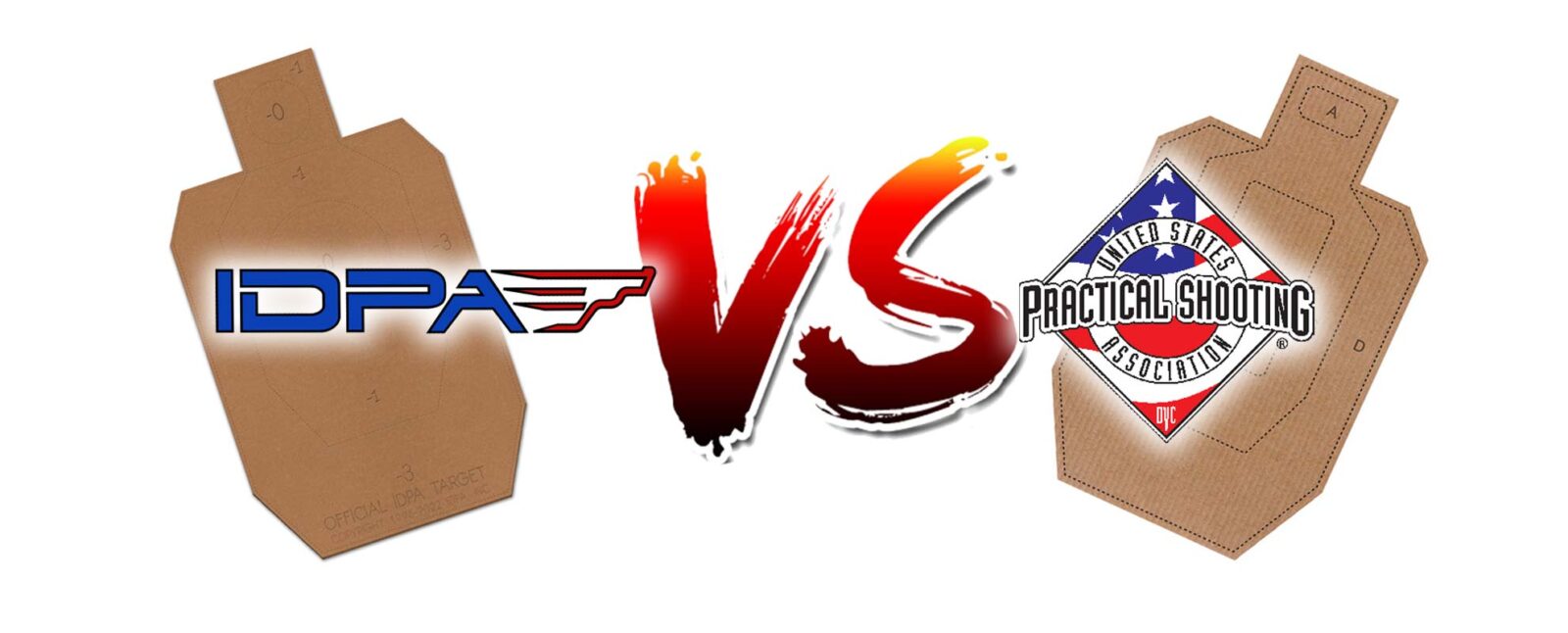
If you’re getting into the world of competitive shooting, chances are you’ve heard about IDPA and USPSA. They’re two of the most popular action shooting sports in the United States—and both offer an incredible way to sharpen your skills, test your gear, and become a more confident shooter. But they take very different approaches.
So, which one should you choose?
Let’s explore the strengths of each, the differences that define them, and why trying both might be the best move you can make.
The International Defensive Pistol Association (IDPA) is all about realism and defensive pistol use. Courses of fire simulate real-life self-defense scenarios, using concealment garments, practical gear, and round count limitations that mimic everyday carry.
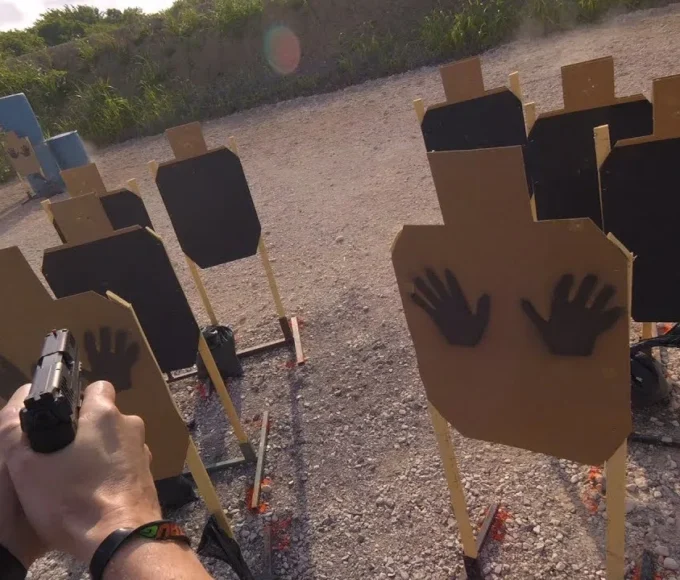
If you carry a gun for personal protection or just want to train with your concealed carry setup, IDPA offers a format that’s not only fun but practical. Stages often involve reloading behind cover, engaging targets in tactical priority, and dealing with simulated real-world problems—like opening a door with your support hand or rescuing a dummy hostage.
The United States Practical Shooting Association (USPSA), on the other hand, is a performance-driven sport. Stages are longer, faster, and flashier—rewarding speed, accuracy, and smart movement. You’re encouraged to solve the stage however you want, often with multiple stage plans and creative approaches.
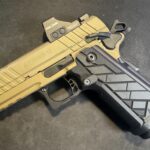
It’s less about defensive realism and more about shooting efficiency. USPSA tends to favor gear that prioritizes speed and capacity, with fewer restrictions. You’ll see everything from heavily modified open guns with red dots and compensators to bone-stock production pistols.
While both IDPA and USPSA are built around drawing from a holster, shooting on the move, and engaging multiple targets, their rules and tone differ quite a bit:
Mindset & Style: IDPA emphasizes concealed carry and a defensive mindset. USPSA is pure performance and competition.
Stages: IDPA stages are smaller, 18 or under rounds, and require tactics like using cover and reloading at specific times. USPSA stages typically have larger round counts with freedom of movement in designated shooting areas and reload timing.
Scoring: IDPA uses a time-plus system where penalties are added to your time based on your accuracy. USPSA uses a hit factor system that focuses more on speed than accuracy.
Gear: IDPA requires concealment garments and limits magazine capacity (usually 10 rounds). USPSA lets you run much larger mags depending on division, and no cover garment is required.
Many shooters do both.
In fact, one of the best ways to improve your all-around skills is to cross-train. IDPA teaches discipline, tactics, and real-world mindset. USPSA sharpens speed, transitions, and problem-solving. The combination can make you a better shooter, no matter your goals.
The catch? Your local scene matters. Some regions have a strong IDPA presence but only occasional USPSA matches—and vice versa. It’s worth checking out both calendars and seeing what’s available within driving distance.
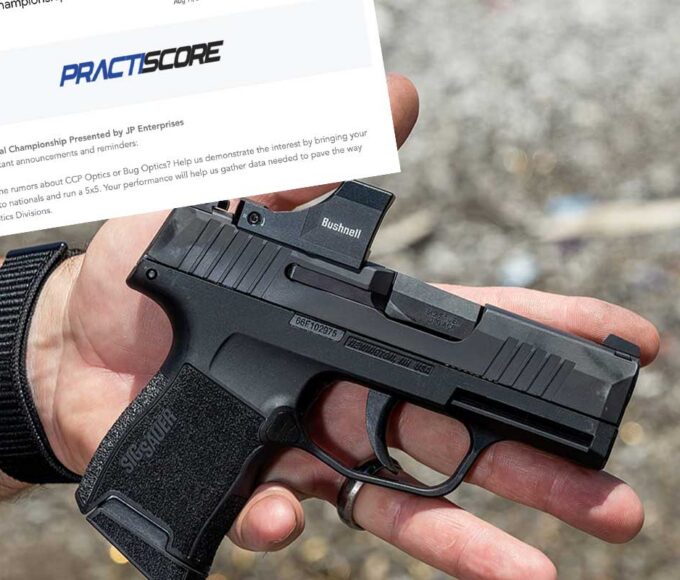
Also, gear overlaps more than you think. A stock pistol like a Glock 34 or SIG P320 can fit into multiple divisions across both sports with minimal changes. One gun, two games.
If you’re serious about improving your marksmanship and want a new challenge, both IDPA and USPSA offer excellent opportunities.
If you want a training-ground for carry guns and self-defense, IDPA is ideal.
If you want speed, open stage design, and a competitive edge, USPSA is your match.
But you don’t have to decide today. Find a local match, sign up, and give both a shot. You might just find that each one teaches you something different—and equally valuable.
And that’s what makes practical shooting so rewarding.
The Sig Sauer P320 has been a hot topic in the firearms...
ByGuncraverAugust 5, 2025In competitive shooting sports like IDPA, USPSA, and Steel Challenge, “Power Factor”...
ByGuncraverJuly 24, 2025Getting started in IDPA (International Defensive Pistol Association) can feel intimidating, but...
ByGuncraverJuly 10, 2025As competitive shooting continues to evolve alongside the firearms industry, the International...
ByGuncraverJuly 8, 2025