The 2026 IDPA rulebook is in effect — and if you haven’t read it, you might be heading into a match with outdated info. Here’s every change that matters, broken down in plain English.
IDPA’s Regional Area Coordinator Leads released the updated rulebook with changes that took effect January 15, 2026. The community got so deep into the weeds on New Year’s Day that IDPA actually had to release a Version 2 shortly after to fix two issues that were caught — a section that should have been deleted from the disqualification rules, and a correction to the steel calibration power factor. Hats off to this community for staying sharp.
Here’s a full breakdown of what changed, why it matters, and what you need to do about it.
The Big One: BUG Division Gets a Makeover
Two changes hit the Backup Gun division simultaneously, and together they fundamentally redefine what BUG is.
8.1.3.5 — BUG Capacity Bumped to 8+1
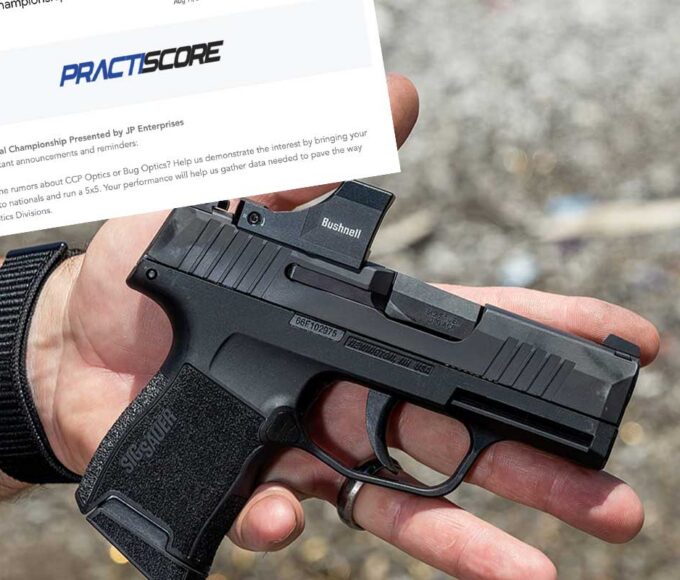
BUG semi-autos can now run 8+1 rounds instead of the old 6+1 limit. This isn’t just a small tweak — it’s IDPA acknowledging the reality of modern micro-compact carry guns. The Sig P365, Springfield Hellcat, and similar pistols are what people actually carry every day, and they hold 10+ rounds. The 6+1 cap was starting to feel artificially restrictive. In our opinion BUG more competitive and honestly more fun to shoot. You’re not forced on fitting 10 magazines on your belt (sarcasum).
A.6.2.1.3 — .380 ACP Removed from BUG
.380 ACP is no longer an eligible caliber in BUG. If you’ve been running a Ruger LCP, a Glock 42, or any other .380 platform, that gun is now out of division. Power factor is also increased to 105
Combined with the capacity bump, this move effectively transforms BUG from a pocket pistol division into a micro-compact 9mm division. The P365, Hellcat, and similar guns are exactly where IDPA is pointing you. It’s a reasonable direction — these are the guns people actually buy for concealed carry — but if you were invested in a .380 setup, you’ve got some equipment decisions to make.
Safety: Non-Functional Manual Safeties Are Now an Automatic DQ
2.2.3 — Non-Functional Manual Safety = DQ
This one’s important for CDP and ESP shooters running 1911s, or anyone with a firearm that has a manual safety as part of its design. If your manual safety doesn’t function properly — meaning it doesn’t engage or disengage as it should — you will now be disqualified.
Stage and Engagement Rule Updates
2.9.1.3 — Muzzle Exclusion Zones Clarified
The muzzle exclusion zone is now only required for doorknobs and handles. This is a cleanup of a rule that had become inconsistently applied across matches. Stage designers were adding muzzle exclusion zones to all kinds of props, which created confusion about what required special muzzle control and what didn’t.
Now it’s clear: doors with knobs/handles require the zone, other props generally don’t. Simpler, more consistent.
3.2.1.5 — Target Priority Updated
Targets in the open are now a higher priority than targets available from cover. This is a meaningful tactical change that aligns IDPA more closely with real defensive logic. If a threat is fully exposed and a threat is behind cover, you address the exposed threat first.
For stage designers, this gives more flexibility to build stages that actually test decision-making under stress. For shooters, know this rule cold — especially at a classifier or a major match where stage briefings will reference it explicitly.
3.2.3 — Activated Targets Defined More Clearly
The definition of activated targets and how they can be engaged has been updated. The previous language created debate about timing, whether movement needed to complete before engagement, and what counted as “activated.” The updated language tightens this up.
Read the full rulebook text on this one before your next match if you shoot stages with moving or activated targets — it’s worth 5 minutes.
3.5.10.3 — Vision Barriers Now Provide Reload Protection
Vision barriers now count as protection for reloads. Previously, only hard cover gave you that protection. This change means a shooter standing behind a vision barrier can perform a reload without being penalized for an exposed reload.
This is a solid quality-of-life change that makes stage design more realistic. In a real defensive encounter, putting something between you and a threat — even if it’s not ballistically rated — is better than nothing.
5.2.2.4 — Firing at anything other than a target Is a Failure to Do Right
Intentionally engaging anything other than a target or activator is now a Failure to Do Right (FP). This covers rounds fired at props, range equipment, barriers, or anything else that isn’t a scored target or an activator.
If you’re dumping rounds into walls, props, or anything that’s not a target — that’s an FP. This formalizes what was already expected behavior, but now it’s explicitly in the rules.
Match Administration Changes
These affect how your local match is run, and they’re worth knowing as both a competitor and anyone who helps run matches.
M-3.2.18 — All Classes Must Be Recognized at Tier Two Matches
Every class — Novice through Master — must be recognized at Tier Two matches and above. Previously, recognition of certain classes was optional at some tiers. This standardizes the experience and means no class gets left out of the results.
M-4.1 — Awards Now Required Through 5th Place
Awards are now required through 5th place at sanctioned matches. This is a direct response to growing participation numbers in competitive shooting. More people are competing, more depth in each class deserves recognition.
If your club runs sanctioned matches, update your award structure. If you’re a competitor regularly finishing in the top 5 of your class, your hardware haul is about to get better.
M-18.7 — Match Performance Promotion Revised to Beating 10
The threshold for match performance promotion has been revised to beating 10 competitors. Previously, this number was different and created inconsistency in how promotions were granted based on field size. Tying it to 10 competitors creates a cleaner, more universal standard.
Download the Official Rulebook
Don’t take our word for it — download the 2026.2 IDPA Rulebook directly from IDPA and read through the full text. The highlighted changes are easy to find and the whole document is worth reviewing before matches.
These are good changes overall. BUG gets modernized, safety standards get tighter, target priority gets more tactical, and match recognition expands.
See you on the range.
Got questions about the rule changes or how they affect your division setup? Drop them in the comments. And if your club is already seeing the impact of these changes at local matches, we’d love to hear how it’s playing out.








Leave a comment